
Harnest is launching the Responsible Trims Collection. CEO Assef Shaikh speaks to WTiN about integrating circular materials into supply chains at cost parity. He delves into what is pushing the industry to make more circular choices.
Bangladesh-based manufacturer Harnest has launched the Responsible Trims Collection – a platform dedicated to help brands adopt recycled, next-generation and biodegradable trims at cost parity.
Tims account for more than 40% of a garment’s bill of materials and remain one of the least addressed barriers in textile recycling, according to Harnest. With fewer than 1% of global textile materials coming from recycled fibres, trims have gone unnoticed for a long time.
Assef Shaikh, Harnest’s CEO says: “The threads, elastics and labels inside a garment have a direct influence on whether that garment can be effectively recovered, recycled or redesigned.”

The challenge
Shaikh says the reason that there is a gap between recycled fibres and global textile fibres is because trims sit in Tier 2 and Tier 3 supply chains “that are less visible to brands”.
Because trims involve multiple material types, complex processing and significant volumes, transitioning to responsible alternatives is “commercially and logistically daunting” in a way that switching a main fabric is not.
“The result is a real problem,” explains Shaikh. “A brand can be genuinely committed to responsible materials and still be unknowingly running conventional polyester threads and petrochemical-based elastics through their entire range. That is the gap we are trying to close.”
Many responsible materials perform well in controlled conditions but have not been tested at the volumes, speeds and processing environments that industrial trims’ production requires.
Shaikh explains how supply chain integration requires careful sequencing as trims involve multiple inputs – polymers, fibres, dues, finishings. He says substituting any one of these requires validating performance across the rest of the process.
“We have absorbed that validation work internally so that brands do not have to. The difficulty is precisely why we are doing it. If it were simple, someone would have done it already.”
The need for change
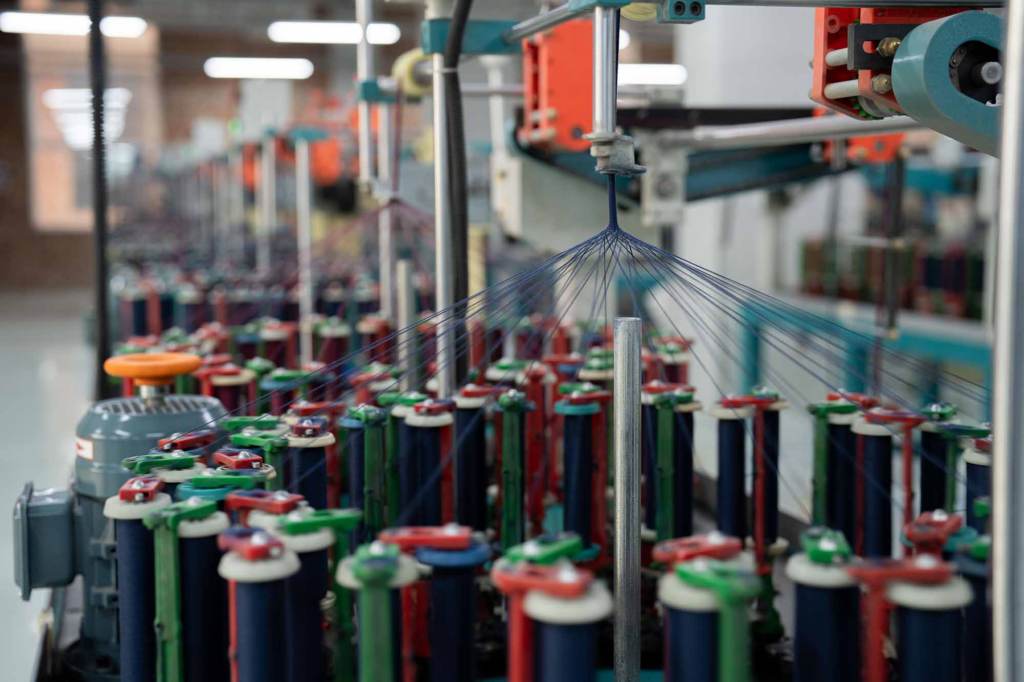
Harnest has supplied threads, elastics, covered yarns, labels, trims and packaging to over 50 countries since 1993. In that time the company has introduced zero-liquid-discharge dyeing, closed-loop water recycling, on-site solar generation and waste-to-energy infrastructure.
“The launch of the Responsible Trims Collection is one of the most significant milestones we have reached in terms of translating what we can manufacture into what the industry actually needs,” says Shaikh.
Brands are coming under increasing pressure from regulators, especially in the EU, to demonstrate circular product development and supply chain transparency.
Shaikh uses the EU’s Ecodesign for Sustainable Products Regulation and evolving Extended Producer Responsibility (EPR) to demonstrate how trims and components are commercially critical.
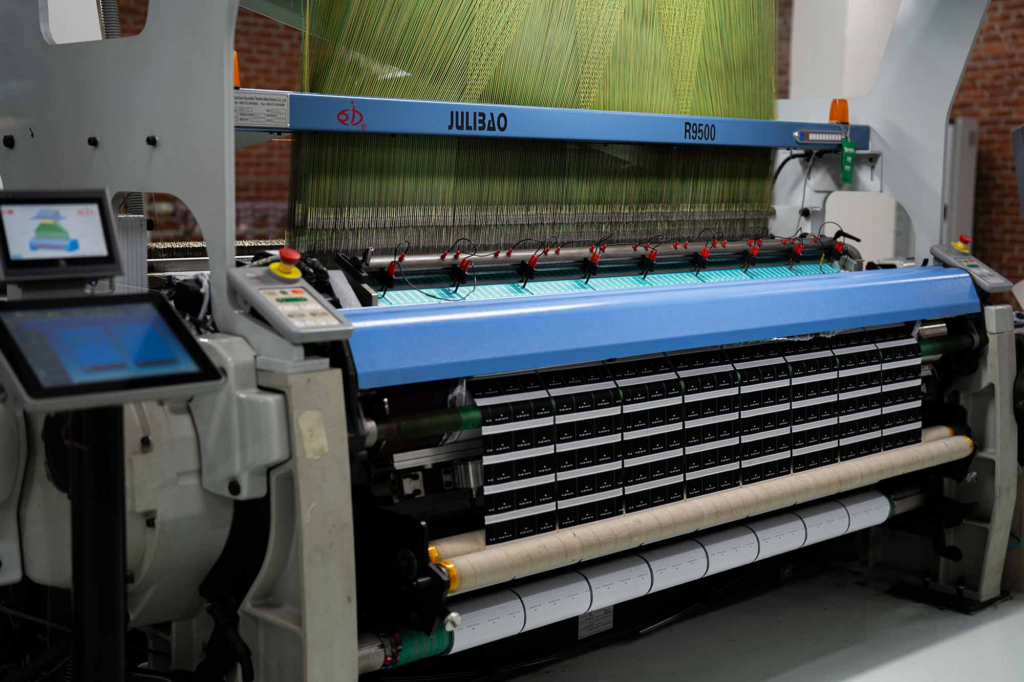
He says: “Brands are recognising that responsible materials must be commercially viable to be adopted at scale. The demand we are hearing is not simply for innovative materials, it is for materials that can work within existing supply chains, at existing price points with existing lead times.”
Adopting circular materials
Harnest is working to overcome cost, availability and supply chain complexity. For the Responsible Trims Collection, Harnest has built cost parity into the production model.
“Cost parity is not an aspiration, it is a prerequisite for adoption, and it is how we have structured the platform from the outset,” says Shaikh. “Our vertically integrated manufacturing model means we control key processes in-house, which gives us levers to manage cost that a third-party distributor would not have.”
Harnest’s industrial-scale capacity enables it to enhance the availability of circular materials. Meanwhile, supply chain complexity is reduced because brands work through Harnest as a single established manufacturing partner. Shaikh adds that it has selected brands with commercial scalability in mind.
Harnest is currently working with OceanSafe, Ambercycle, BlockTexx, Indorama Ventures and Jiaren. The first material it is launching on the platform is OceanSafe’s naNea, a next-generation polymer designed as an alternative to conventional polyester.
NaNea offers 93% biodegradation within 99 days of marine conditions as tested against ASTM D6691, leaves no persistent microplastics, and is recyclable alongside polyethylene terephthalate (PET), with lead times and pricing comparable to conventional trims. It also holds the Cradle to Cradle Certified® Material Health Gold certification.
“For brands adopting naNea-based sewing threads and elastics, they do not need to make changes to their specification, sourcing or production processes,” explains Shaikh. “The drop-in nature of naNea is precisely why we chose it to lead the collection – it demonstrates that responsible materials do not have to mean a compromise in supply chain convenience.”
When selecting materials to work with Shaikh says Harnest looking for technical maturity, commercial viability and the ability to operate at industrial scale.
“We were not looking for the most innovative material in isolation. We were looking for materials that could work inside a real manufacturing system, at real volumes, at a price point brands could adopt.”
Looking ahead
Harnest is rolling out the Responsible Trims Collection in phases across 2026. Phase one launches with OceanSafe’s naNea biodegradable polymer. Subsequent phases will bring in Ambercycle and BlockTexx for textile-to-textile recycling, Indorama Ventures for advanced polymer regeneration and Jiaren for circular material design.
“The reason for the phased approach is credibility, not pacing. We want the industry to understand each technology and ensure its commercial applicability properly before we introduce the next,” says Shaikh.
Overtime Shaikh expects brands will need more materials, product categories and stronger data and traceability infrastructure so they can understand the environmental performance of every trim they are using.
“That will matter more as regulatory requirements develop,” he says.
Shaikh adds that Bangladesh is the second largest apparel exporter in the world and so no longer competes on cost alone. Exporters he says need to demonstrate control, consistency and capability.
“The Responsible Trims Collection is part of demonstrating that Tier 2 and Tier 3 manufacturing can be a driver of materials innovation, not simply a place where decisions made upstream get executed.”